The new generation living cell panoramic super-resolution microscope (MH PanoView) perfectly inherits the excellent quality of MH HoliView in label free, ultra-high spatiotemporal resolution, and three-dimensional panoramic imaging, and continuously breaks through in imaging field of view, imaging mode, modal fusion, and other aspects.
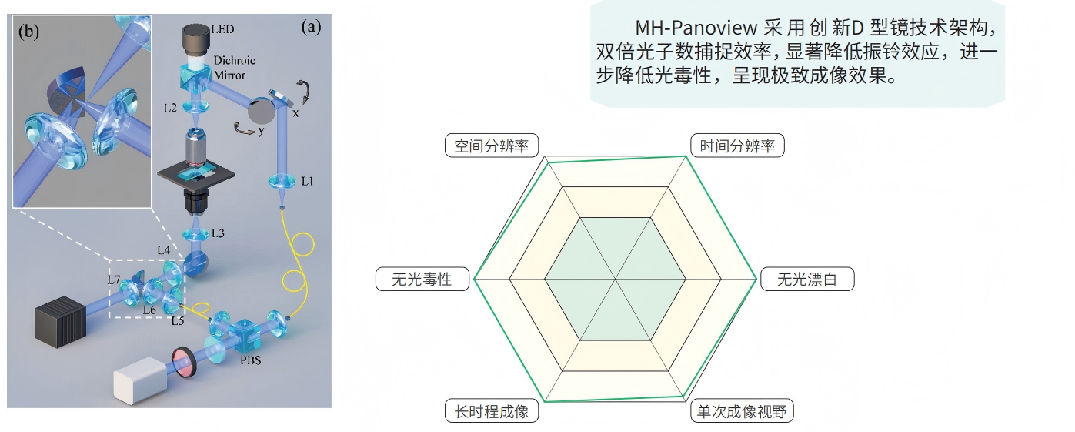
· PanoView adopts a brand new technological architecture, which is compatible with ultra-high spatial resolution and ultra-high temporal resolution, and can also achieve single imaging with a large field of view.
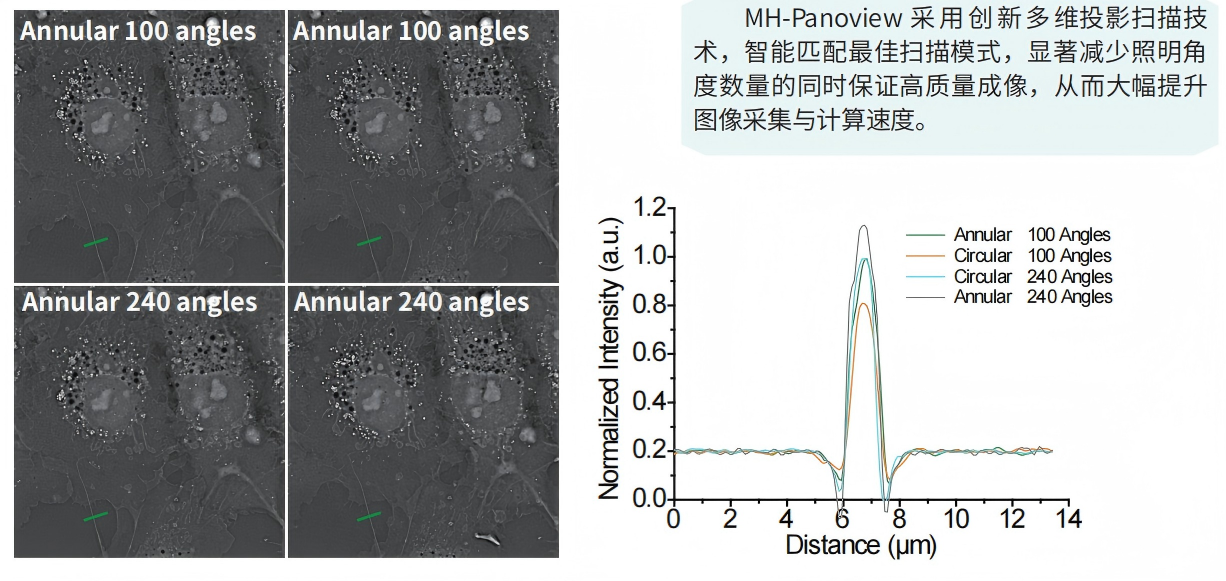
· PanoView is equipped with a new multidimensional projection scanning imaging technology, which can achieve multiple scanning imaging modes. The system can intelligently match the best scanning mode according to different samples, greatly improving the speed of image acquisition and calculation.
· PanoView combines label free and digital confocal imaging to achieve dual-mode fusion imaging. It can achieve both panoramic observation of live cells with a large field of view and specific characterization of live cells.
Based on the panoramic super-resolution microscope of living cells, it can achieve both ultra-high resolution panoramic imaging of multicellular systems and cross scale, high content panoramic detection of living cells; It can achieve both macroscopic monitoring of cell morphology imaging and microscopic monitoring of subcellular organelle imaging.
One-stop Panoramic Imaging for Live Cells
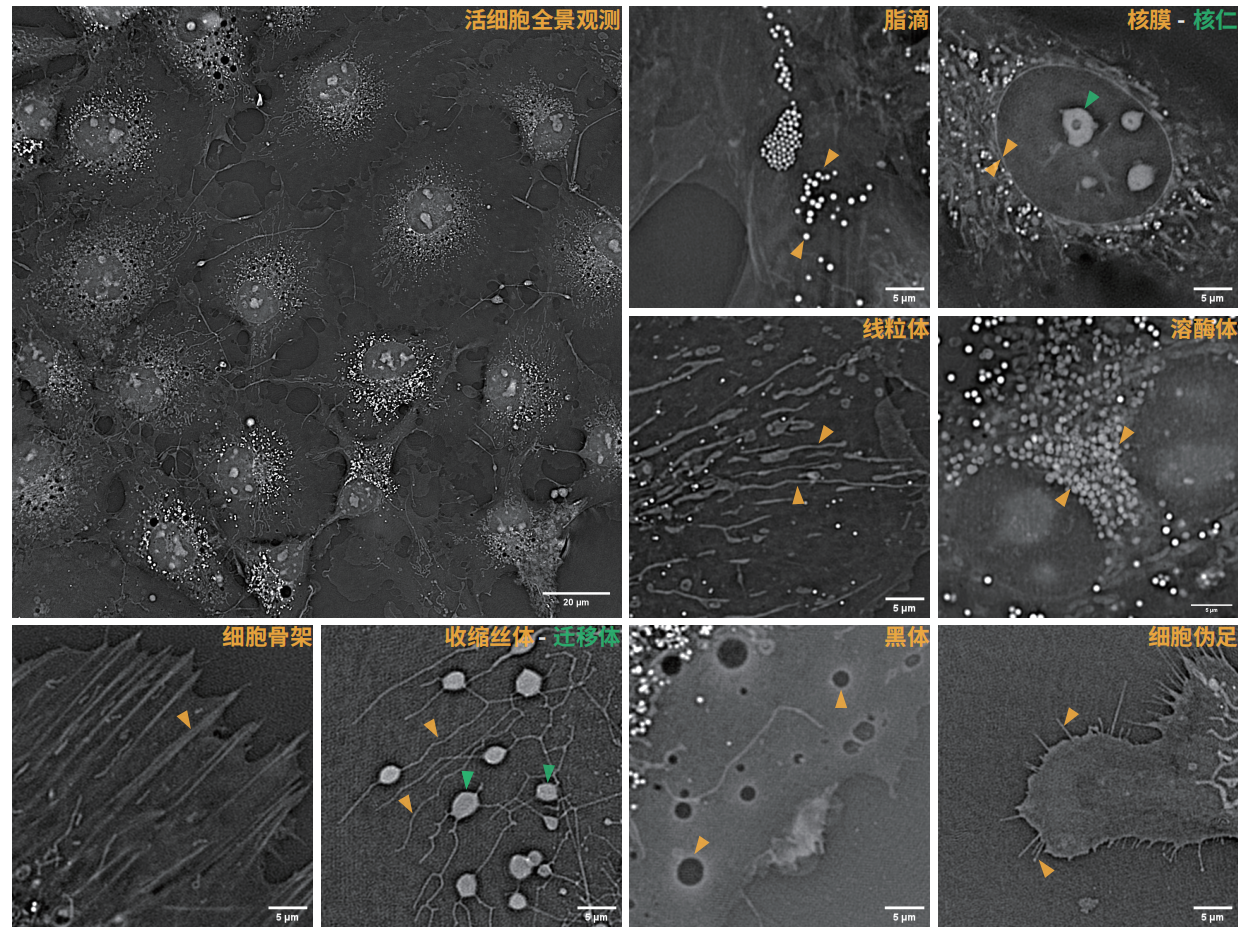
Sample source: Chengguan Optics
Label-free Live Cells Achieve a Rresolution of 130 nm
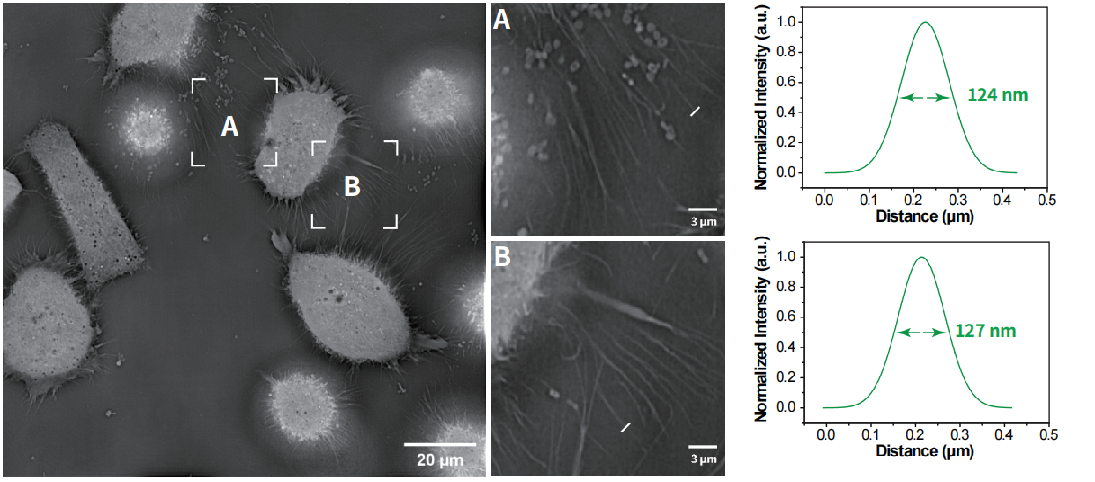
Sample source: Tsinghua University Deng Haiteng's research group
Technical Advantages
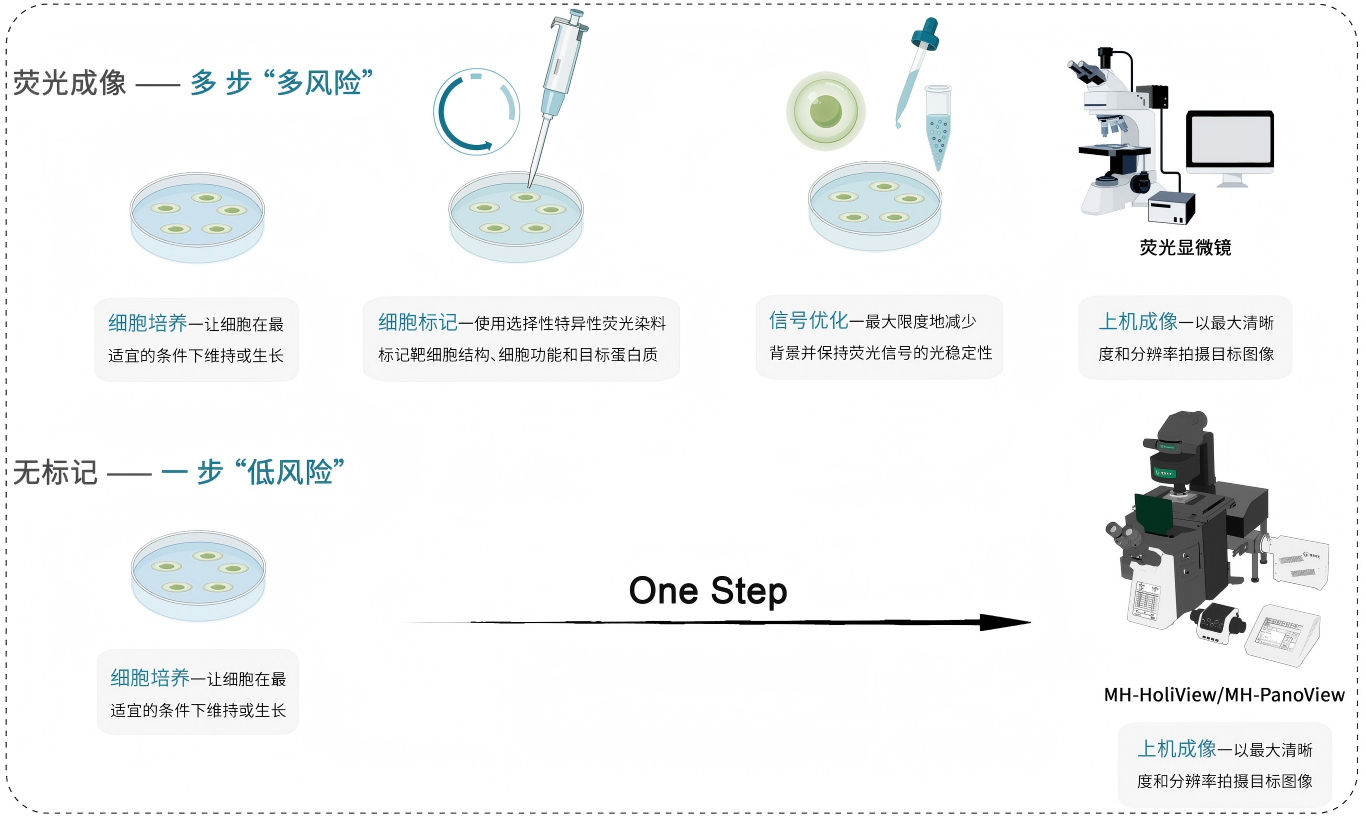
Simple Sample Preparation Steps, Label-free Imaging
Non-Photobleaching
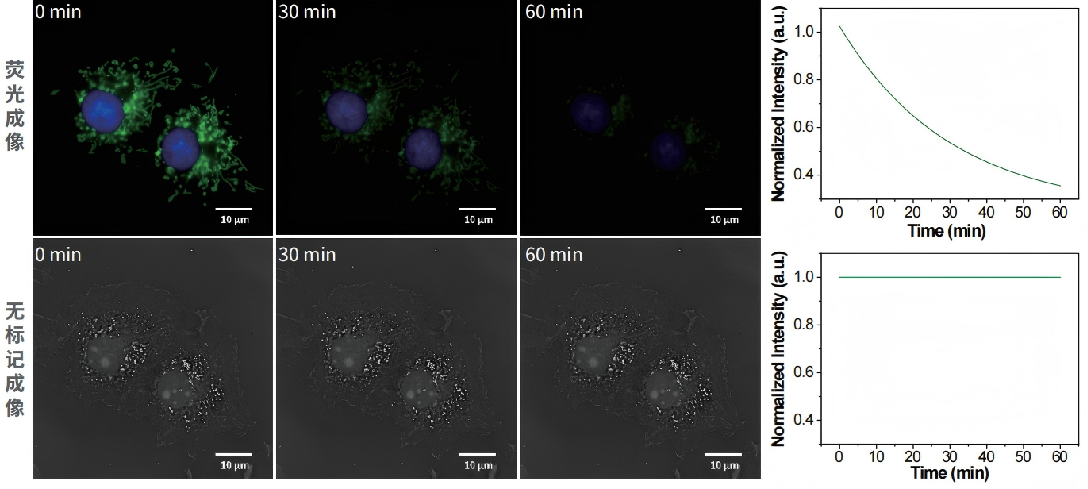
Sample source: Chengguan Optics
Non-Phototoxicity
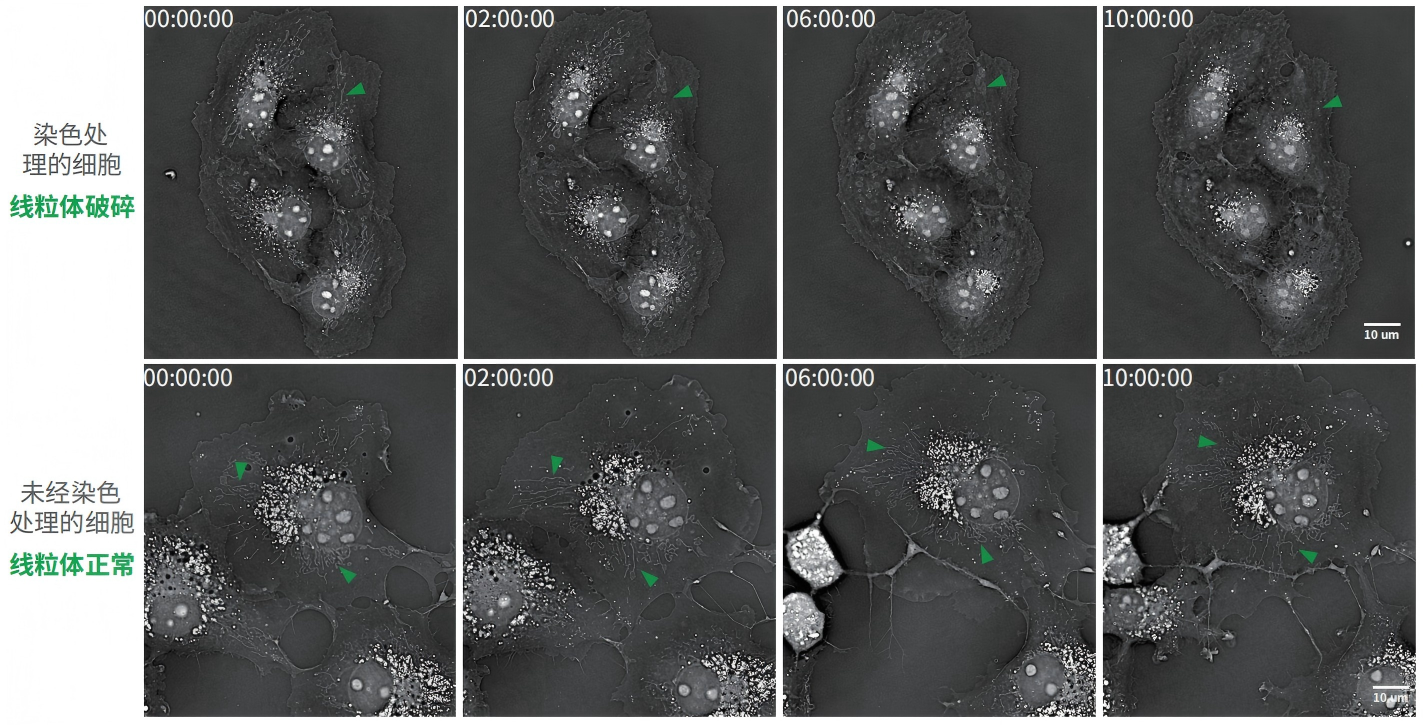
Sample source: Chengguan Optics
3D Imaging, Digital Section
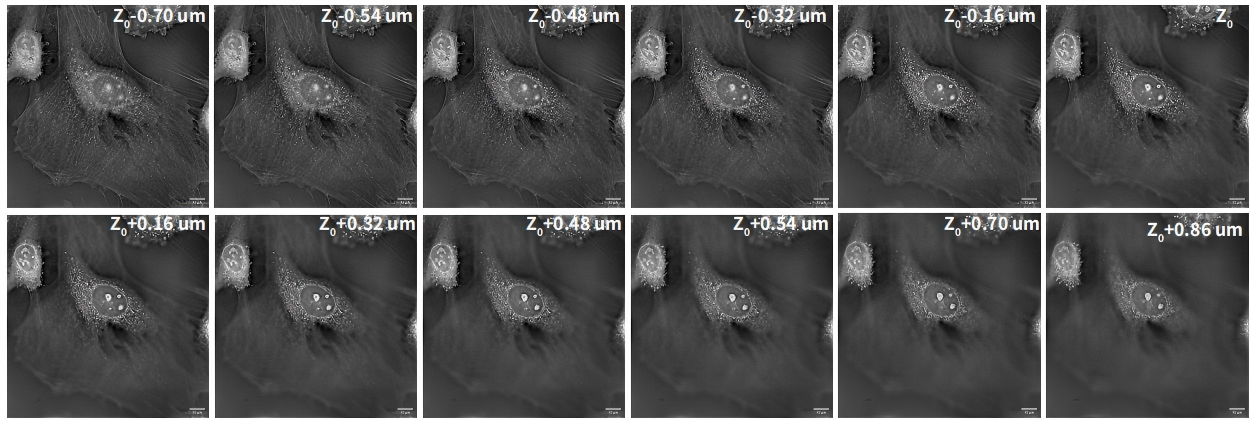
Sample source: Chen Hao Research Group of Shanghai Institute of Materia Medica, Chinese Academy of Sciences
Quantitative Refractive Index Imaging
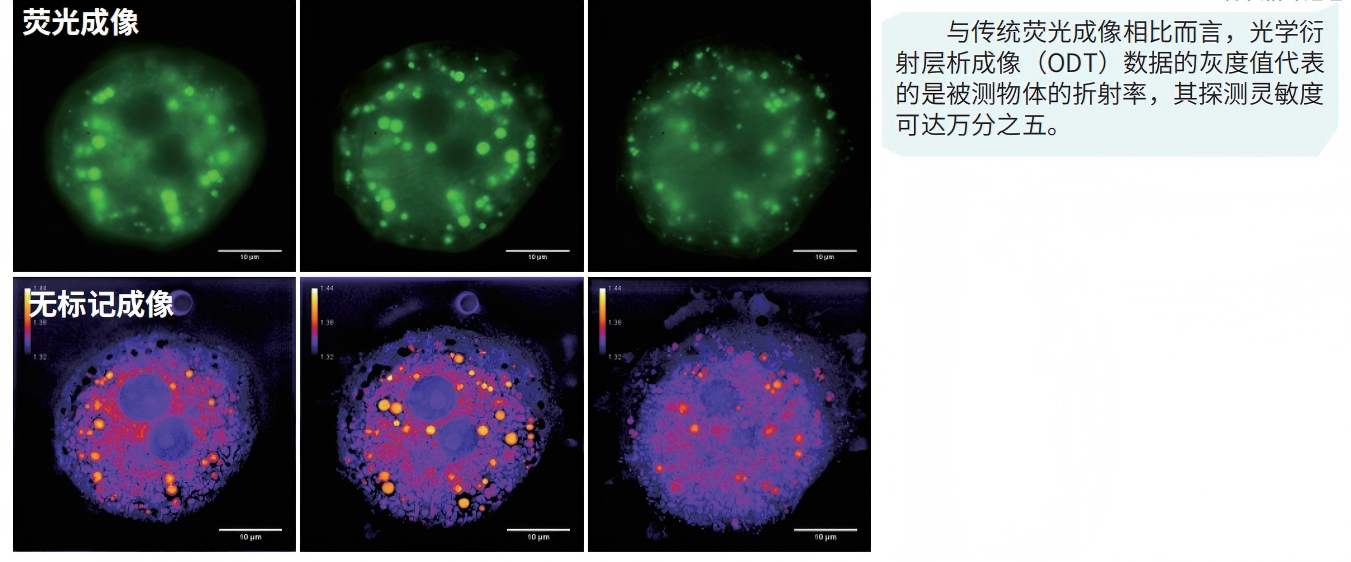
Sample source: Chen Liangyi's research group at Peking University
Intelligent Data Collection Software
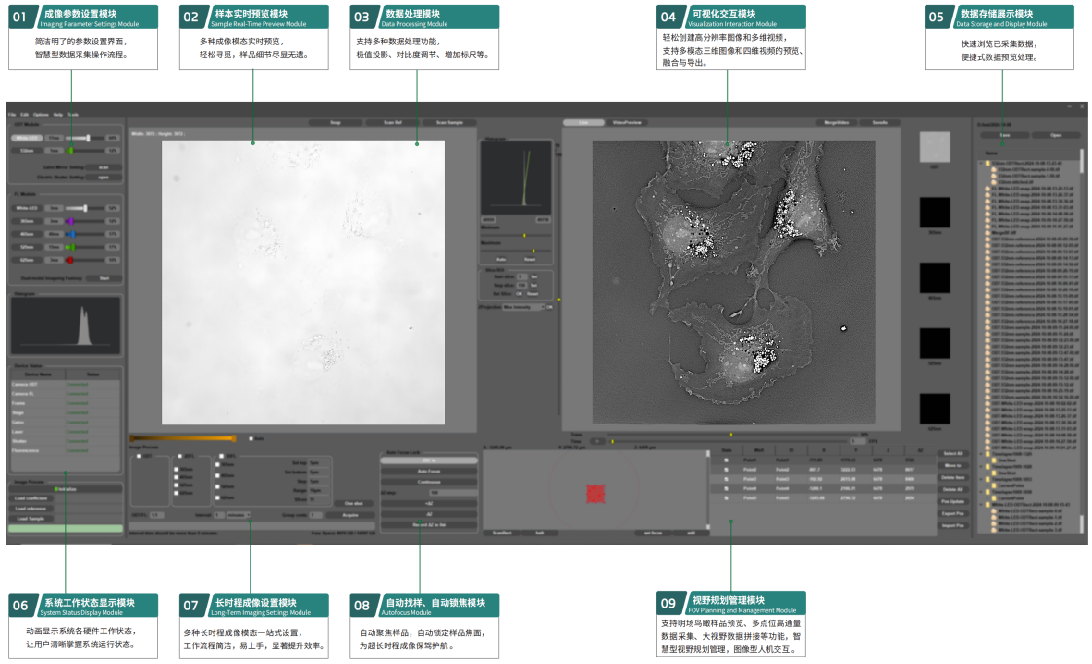
Product Advantages
New Technical Architecture, Enjoy Exceptional Imaging Effects
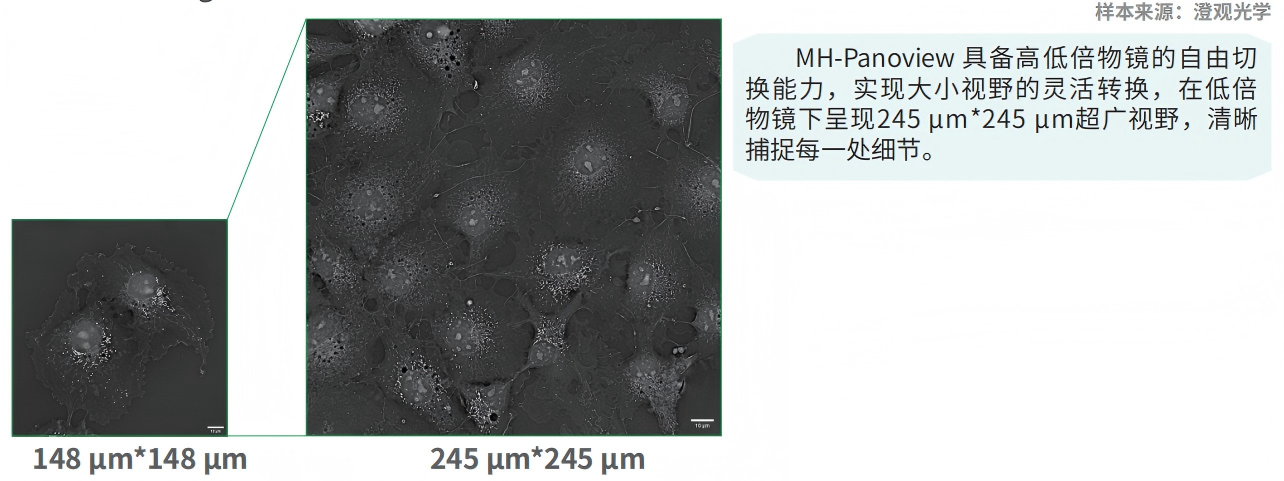
Free Switching between Different ROI
Hyper-dimensional Projection Scanning Technology
Sample source: Chengguan Optics
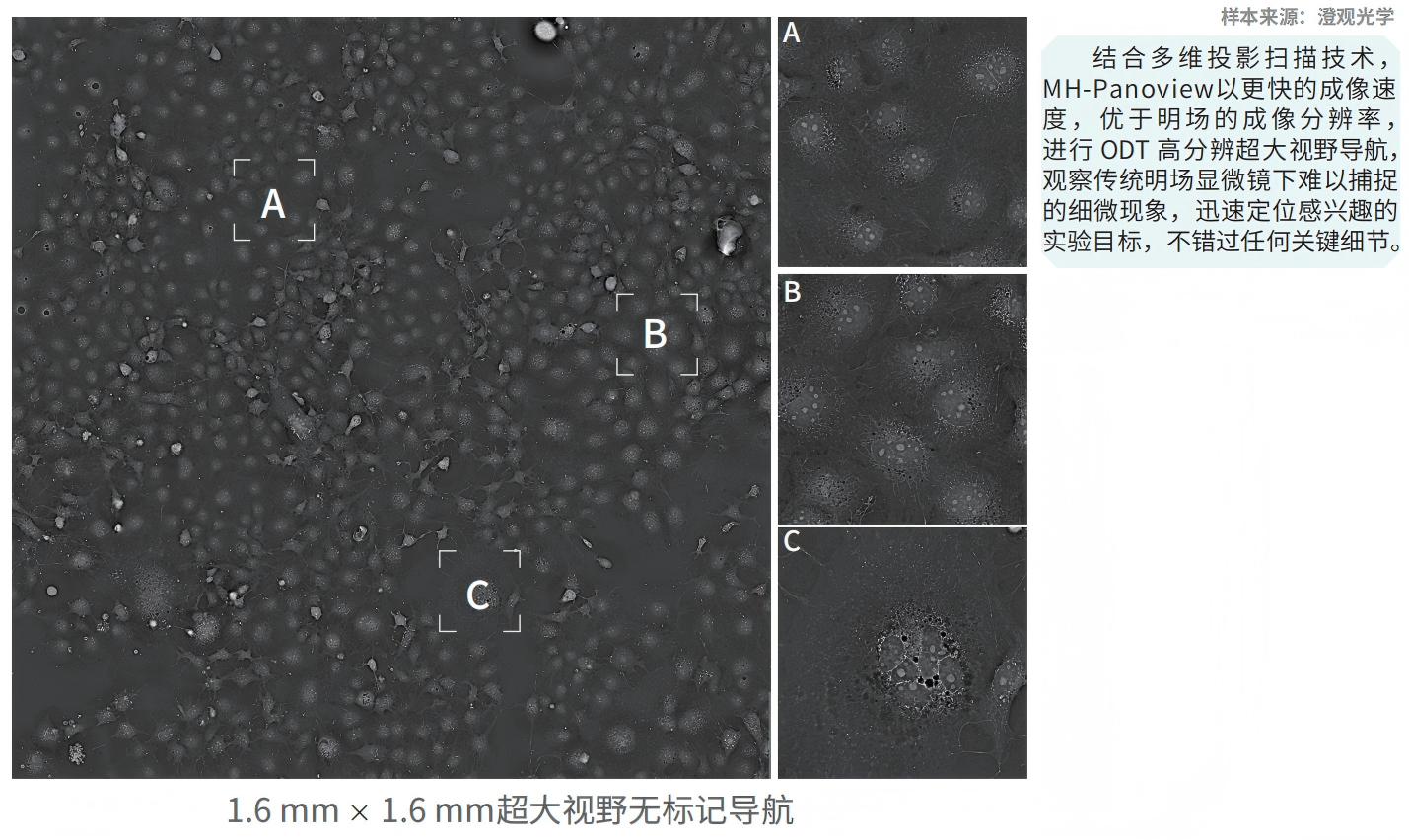
Whole-Slide-Level Bright-Field Real-Time Navigation
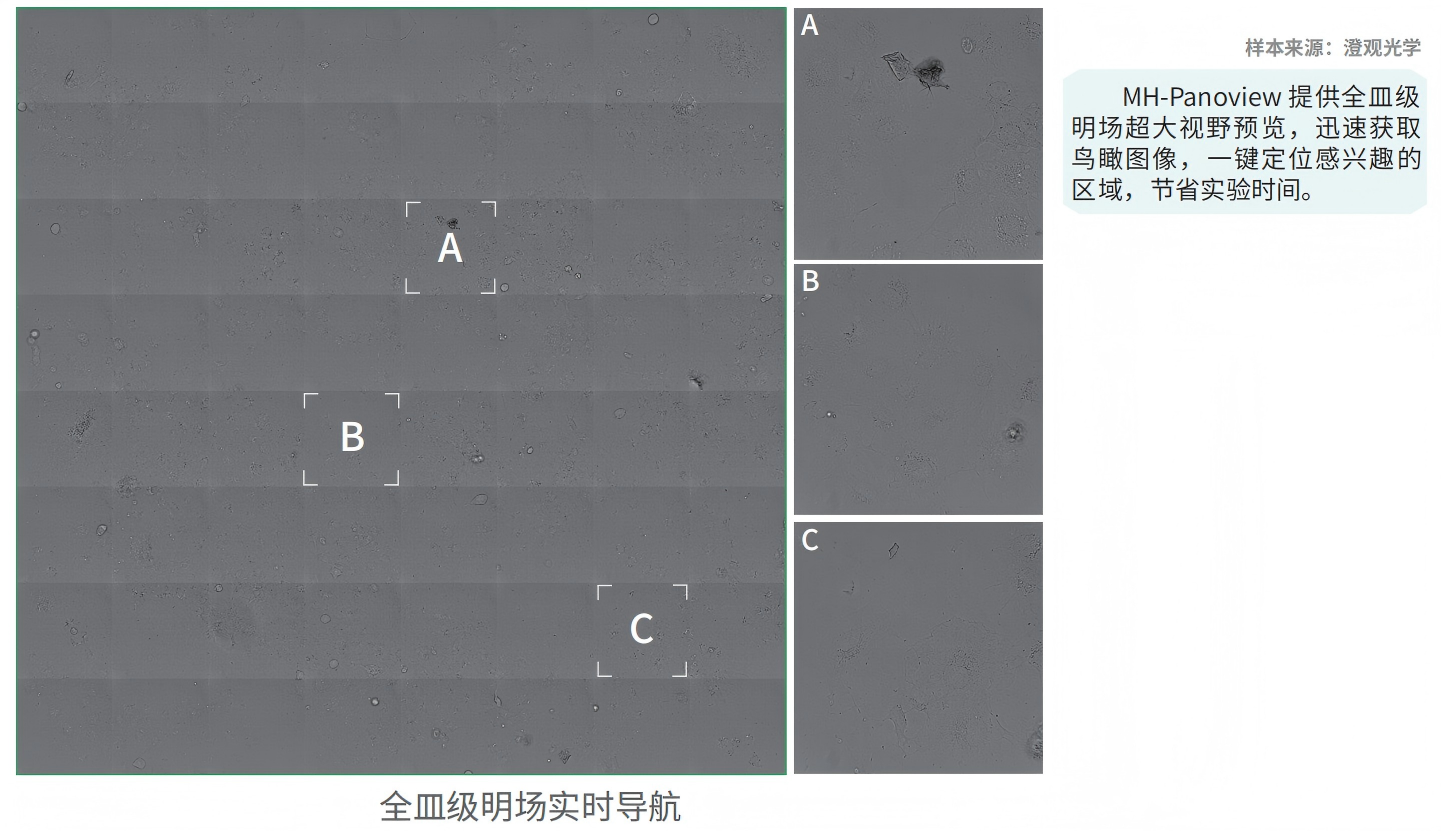
Millimeter-Level Ultra-Wide Field Label-free Real-Time Navigation
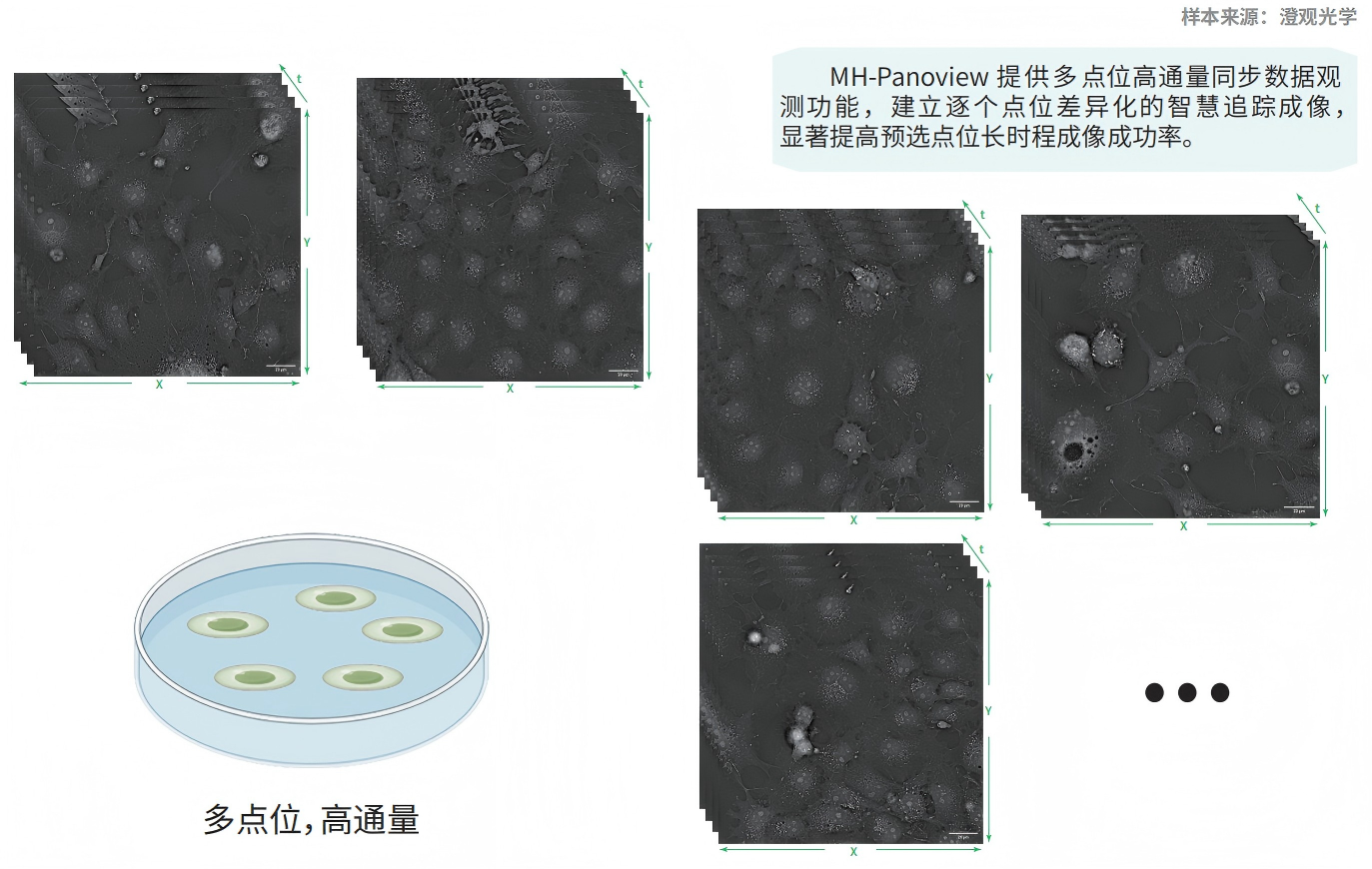
Multipoint High-Throughput Synchronous Data Observation
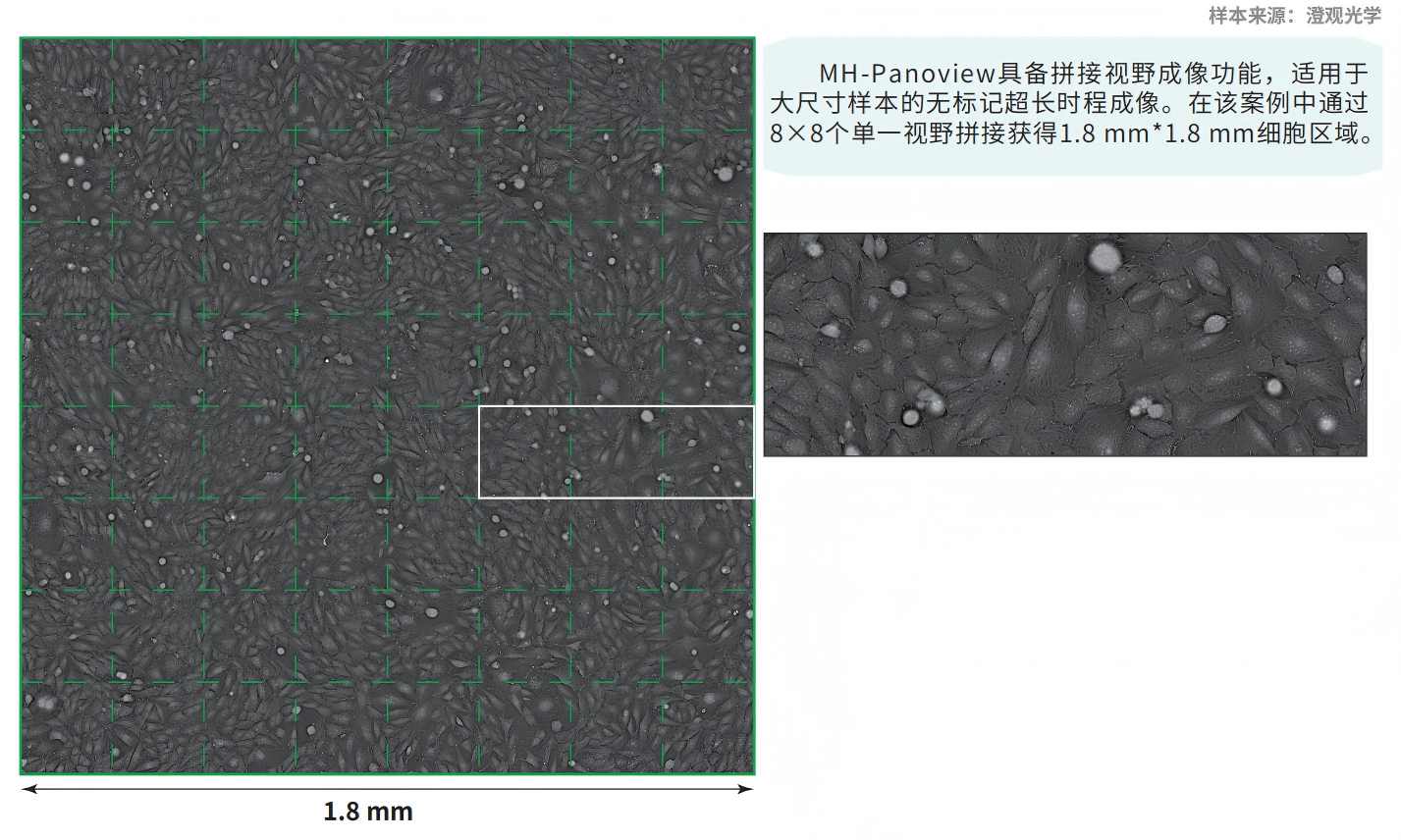
Ultra-Wide Field 3D Stitching with High Temporal Resolution
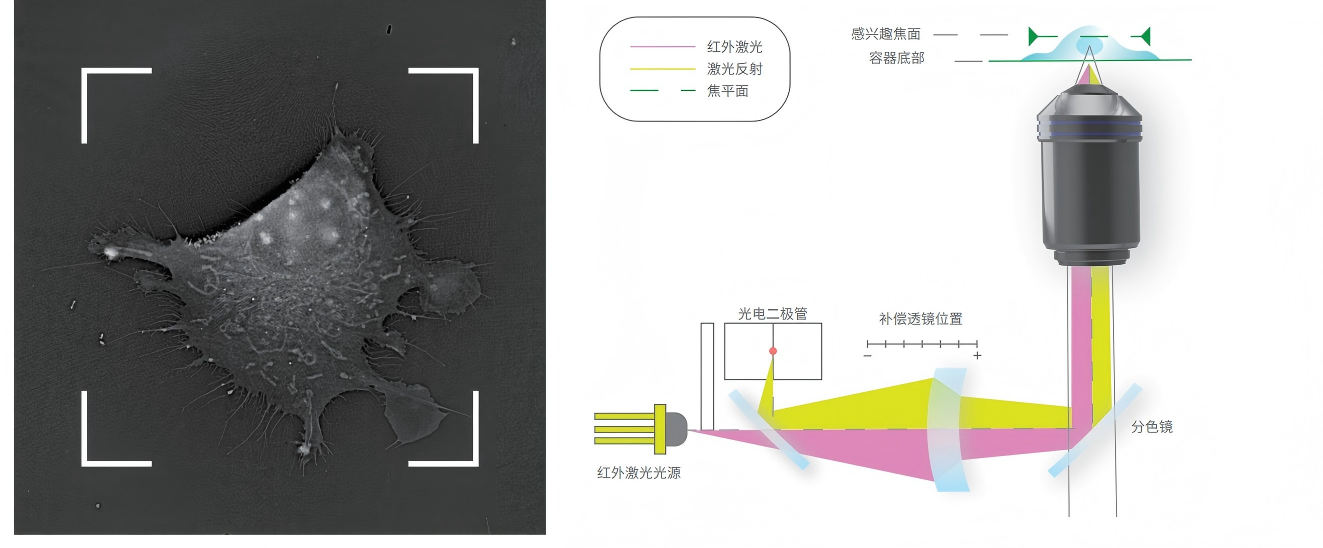
XY Axis Tracking, Z Axis Autofocus (Physical Autofocus, Image Autofocus)
Combine Data Compression to Achieve Real-time Preview of 2K Video
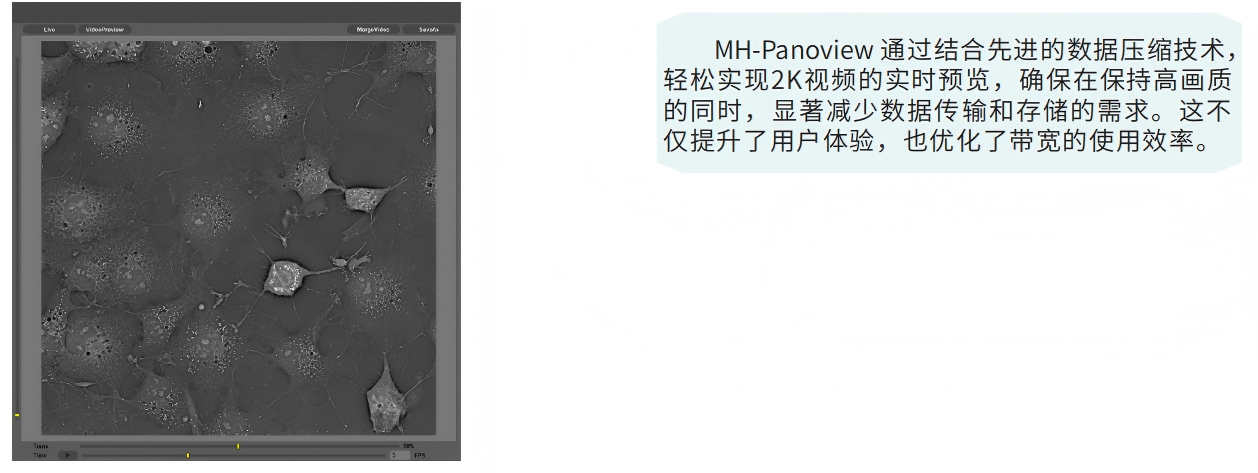
Sample source: Chengguan Optics
Multi-modal Imaging, Digital Confocal
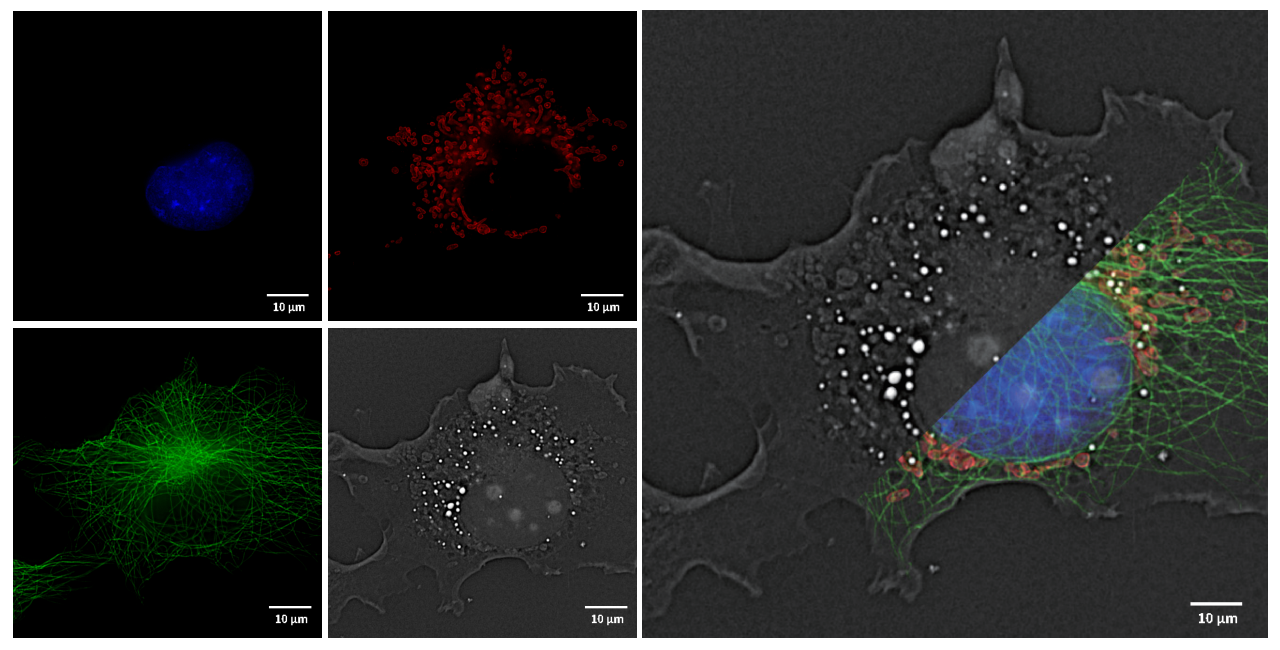
Sample source: Chengguan Optics
Intelligent Data Segmentation and Tracking Software
Feature-Rich · User-Friendly Interface · Easy to Use
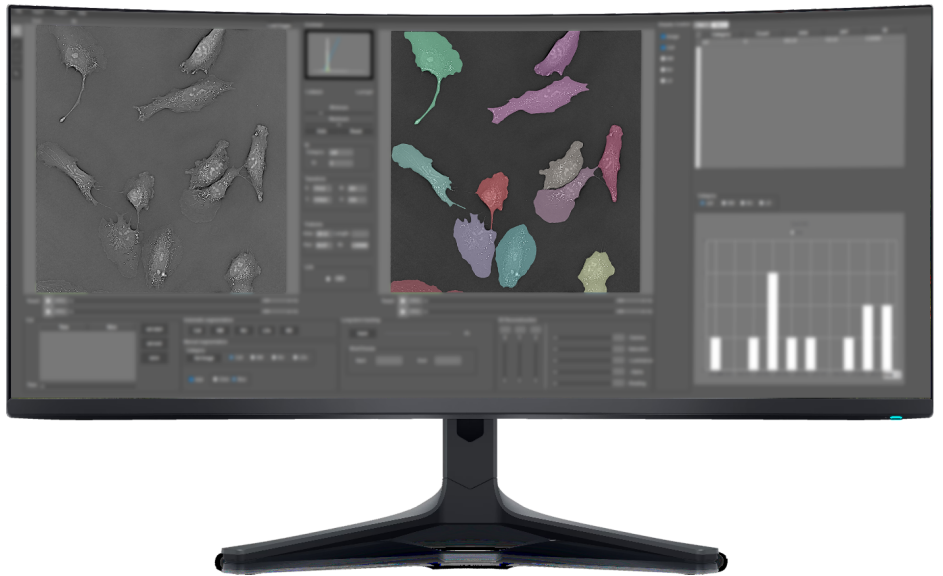
Based on Deep Learning, Easily Achieve One-Click Qualitative Image Segmentation
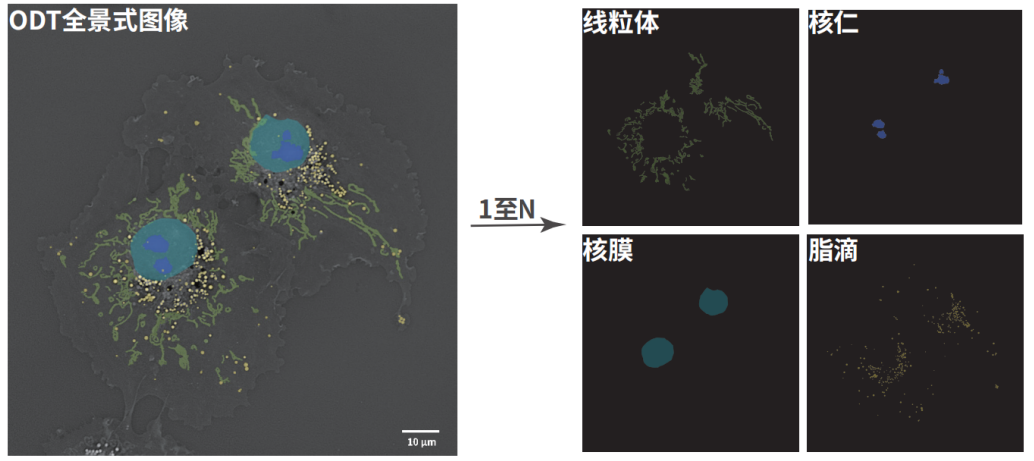
Sample source: Chengguan Optics
Based on Deep Learning, Easily Achieve One-Stop Quantitative Data Analysis
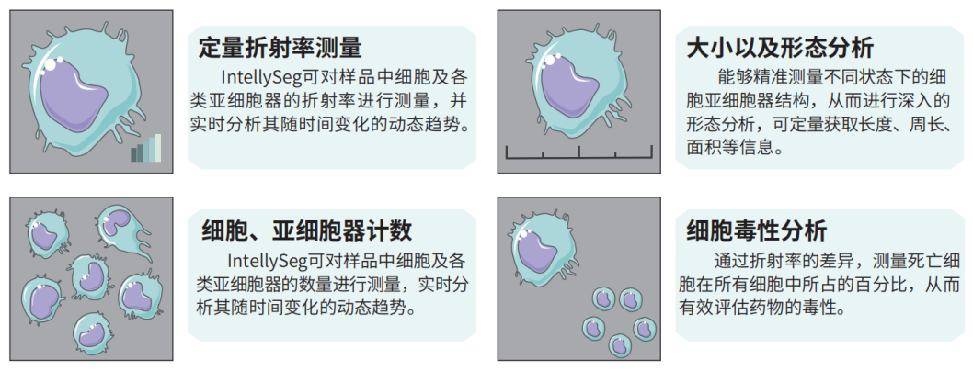
Quantitative Analysis of Refractive Index during Cell Death Process
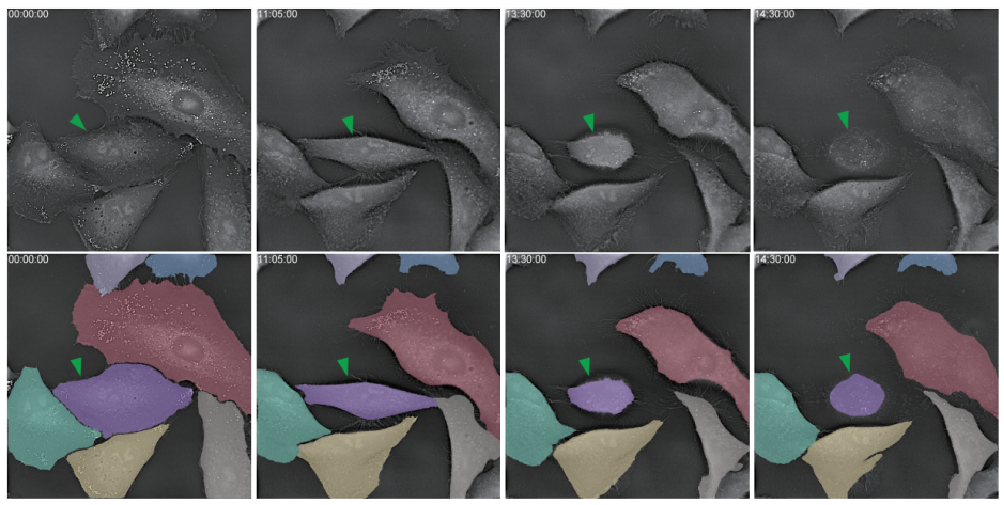
Sample source: Chengguan Optics
Quantitative Analysis of Migrasomes
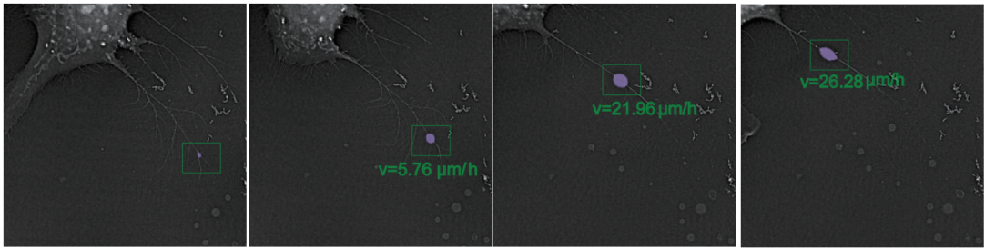
Sample source: Chen Yang's research group from Peking University School of Medicine
Application Cases
Intracellular Organelle Research: Interactions of Subcellular Structures
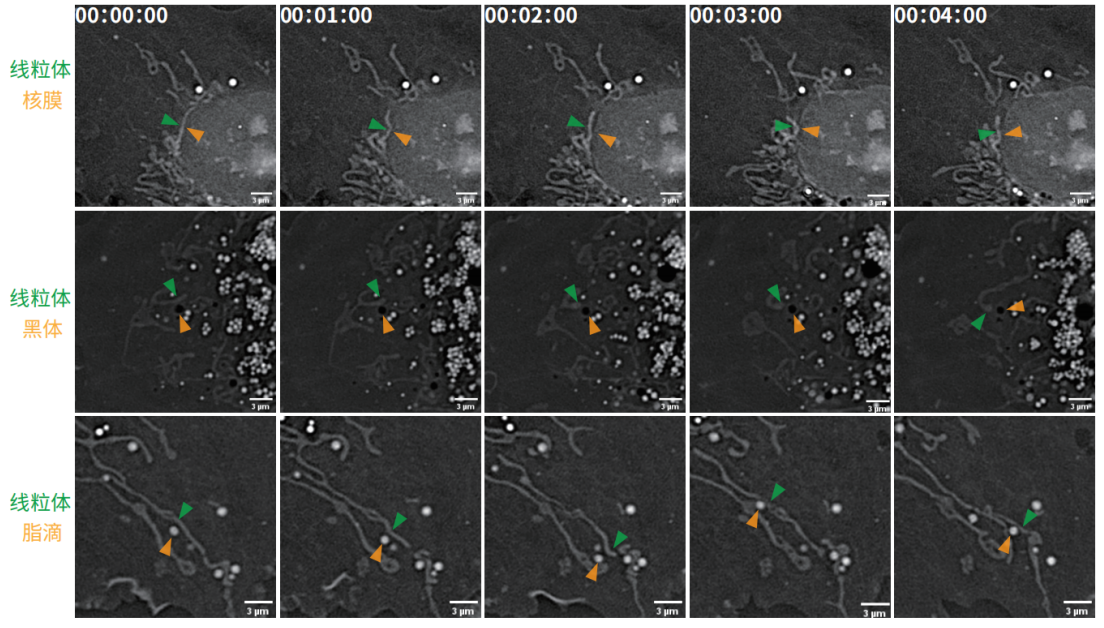
Sample source: Chengguan Optics
Extracellular Organelle Research: Generation of Migratory Bodies
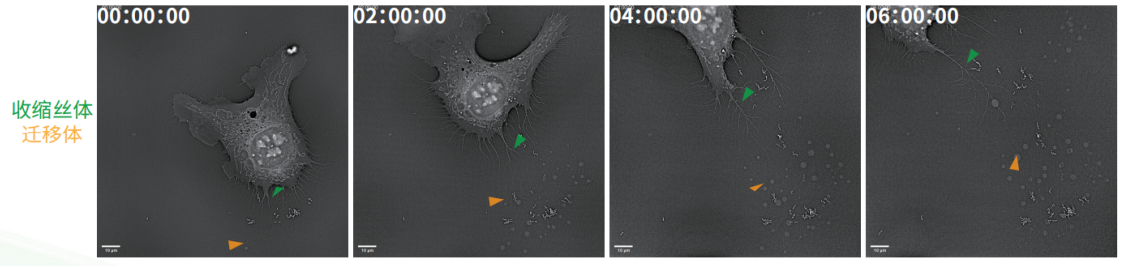
Sample source: Chen Yang's research group from Peking University School of Medicine
Cell-Cell Interactions: Transport of Lipid Droplets via Tunnel Nanotubes
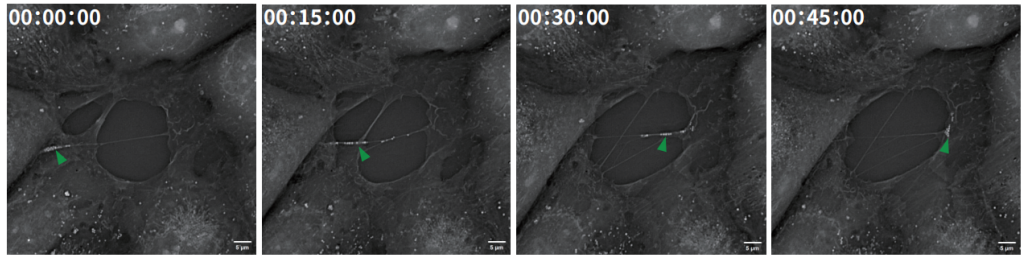
Sample source: Li Juan's research group at Hangzhou Institute of Medicine, Chinese Academy of Sciences
Drug Screening
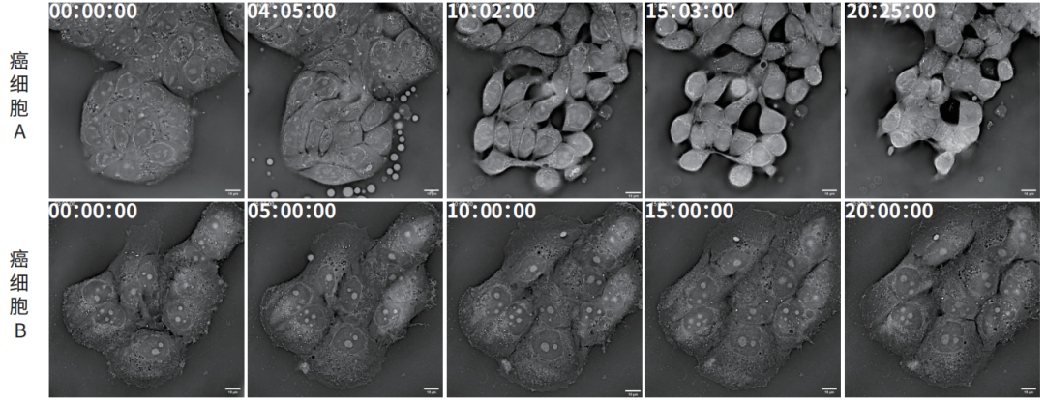
Sample source: Hangzhou Institute of Medicine, Chinese Academy of Sciences Han Da's research group
Mechanisms of Cell Death Research: Pyroptosis
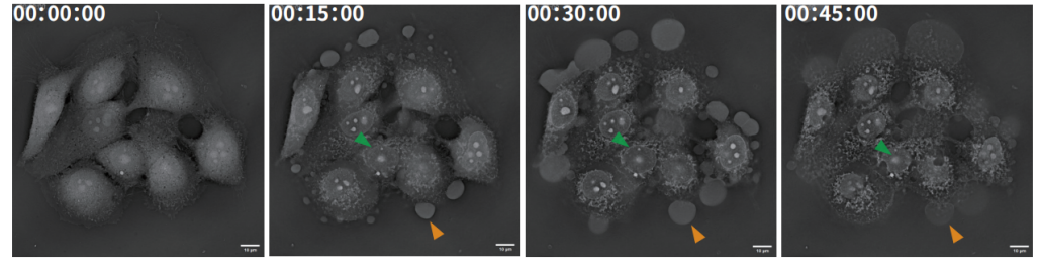
Sample source: Hangzhou Institute of Medicine, Chinese Academy of Sciences Guo Peng's research group
Process of Macrophages Phagocytosing Bacteria
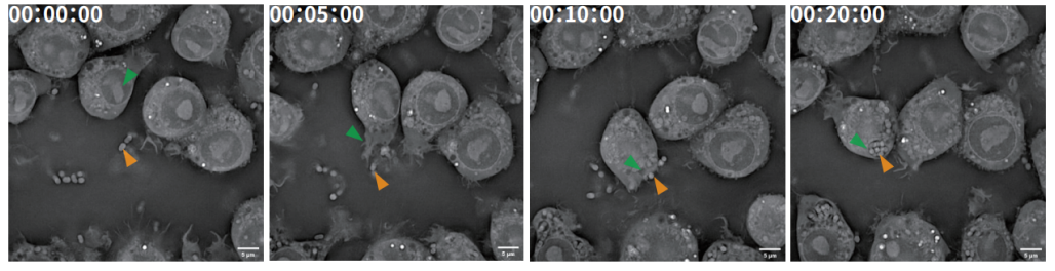
Sample source: Peking University People's Hospital Wang Hui's research group
Mitosis Process
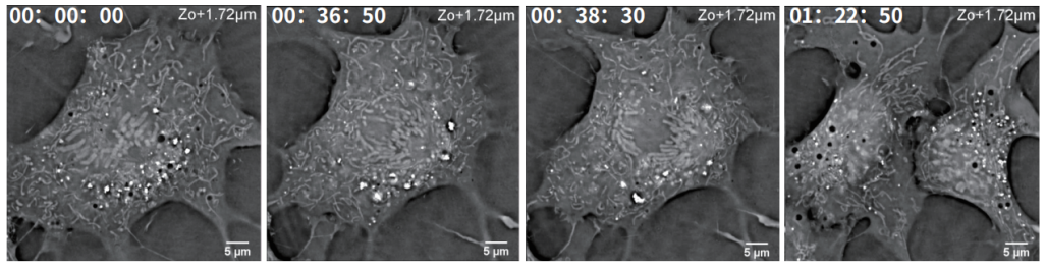
Sample source: Peking University Chen Liangyi's research group