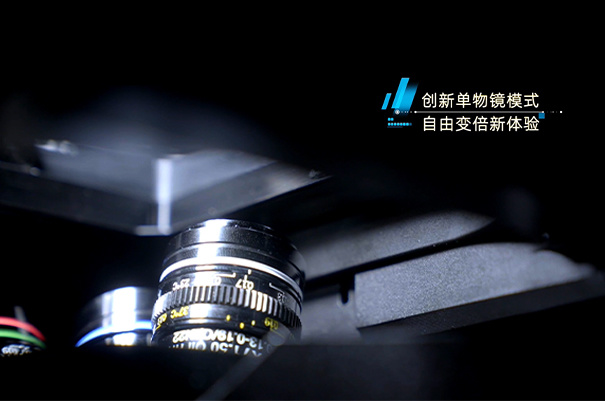
Subverting tradition Redefine the Light Sheet The latest generation of single objective 3D optical imaging technology, which combines illumination detection with a single objective lens, saves you the need for complex system optical path adjustment and greatly enriches your sample operation space.
| 
|
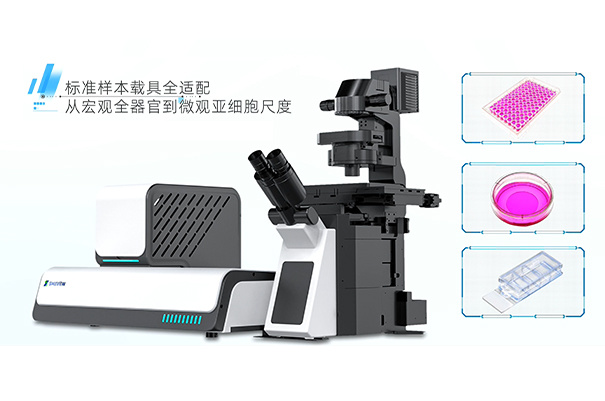
| Universal light film for all scenes From glass slides, culture dishes to well plates Thanks to its unique single objective lens mode, SmartView is suitable for various application scenarios. The open top optical design allows you to achieve one click 3D imaging with simple sample loading operations. At the same time, due to compatibility with electric switching at different magnifications, in situ cultivation and observation of samples can be achieved.
|
Realistic display 3D spatial details The unique multi-level diffraction free light field control technology can generate the thinnest "450 nm" optical knife, achieving ultra-high tomographic accuracy.
| |
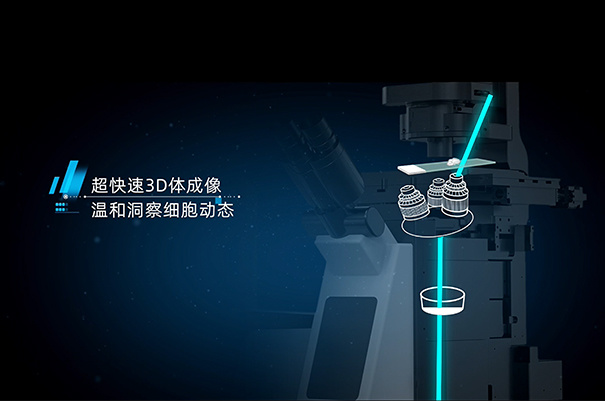
| Optical characteristics Reduce phototoxicity and photobleaching Laser tomography illumination technology achieves selective planar illumination of samples, greatly reducing the system's phototoxicity to samples and facilitating non-invasive long-term dynamic detection of biological samples. At the same time, without the need for tilted plane correction in optical microscopy design, the utilization efficiency of fluorescence signals can be greatly improved.
|
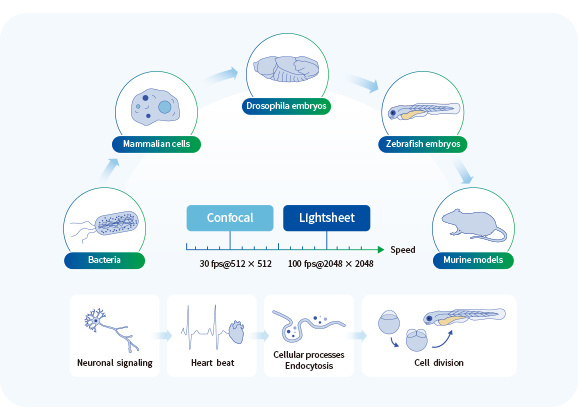
From live cells, organoids to whole organs The multimodal optical microscopy imaging system can achieve seamless switching between bright field, wide field, and optical sheet in situ. The SmartView with inverted single objective mode design allows for a diverse range of research objects, meeting your needs for imaging speed, resolution, phototoxicity, depth, and more.
| 
|
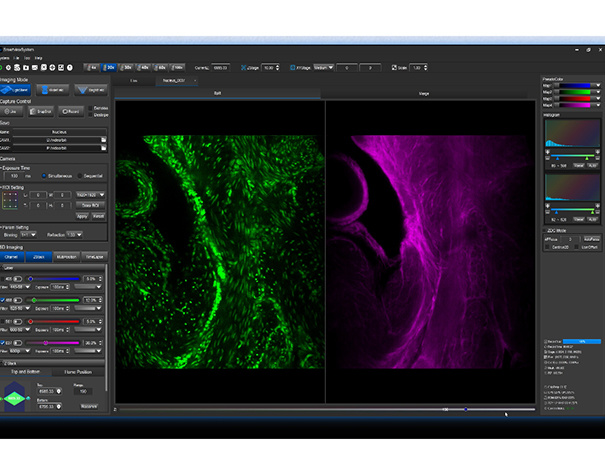 | Intelligent image acquisition software Our self-developed high-throughput image acquisition software supports intelligent multi-dimensional image acquisition. It can achieve user-defined imaging modes such as multi-color imaging, time series imaging, multi-point imaging, z-axis tomography imaging, and large image stitching.
|
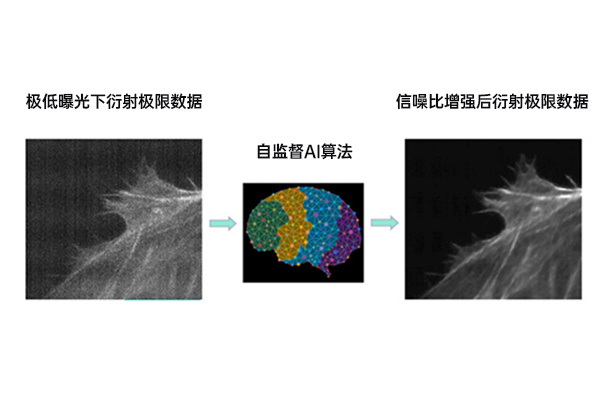
AI Empowerment The self supervised AI image signal-to-noise ratio enhancement algorithm can perform high fidelity image enhancement on weak fluorescence signals without the need for labeled data. The related technology has been published in Nature Communications.
|  |